
N Kalaiselvi, the first woman Director General of the Council of Scientific and Industrial Research (CSIR), has received an extension to her tenure until February 2027. Known for her pioneering work in lithium-ion batteries, Kalaiselvi's extended leadership marks a significant milestone for women in Indian science.
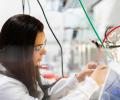
CSIR Director General N Kalaiselvi emphasised the importance of research and applied sciences in developing sustainable solutions for India's energy security and environmental challenges at an international conference on Sustainability Through Fundamental and Applied Sciences (STFAS), 2026.

'Our problem is not a budget deficit but a trust deficit. We need to trust our institutions and industries to innovate and lead. That is the way forward for India.'
India's R&D spend trebled in a decade, but China's has grown even faster

'When Dr Murli Manohar Joshi wanted to start a course on astrology, Jayant was the first one to have the courage to stand up and say astrology is not science.' 'That's a very rare quality -- to stand up to authority.'
Here is an explainer on the functioning of the seven-year-old body.

The counselling session was likely to begin in the first week of July. However, the counselling authorities had not notified any date or schedule.

The Centre on Saturday night announced that the probe into alleged irregularities in the medical entrance exam NEET will be handed over to the CBI for a comprehensive investigation.

Uttarakhand Chief Minister Pushkar Singh Dhami on Saturday reviewed relief and rescue operations with senior officials of the government after returning to Dehradun from on-site inspection of Joshimath landslide area gave directions for forming a coordination committee immediately at the government level under the chairmanship of the Additional Chief Secretary and at the local level under the chairmanship of the Commissioner Garhwal.
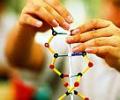
Last week, scientists working with the Institute of Genomics and Integrative Biology (IGIB) in New Delhi decoded the genome of a 52-year-old man from Jharkhand after nine weeks of study -- a first in the country. The feat has helped India join a select club of countries -- the US, UK, Canada, Korea and China.

This test uses an indigenously developed, cutting-edge CRISPR technology for detection of the genomic sequence of SARS-CoV-2 virus, CSIR said in a statement.
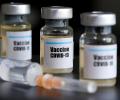
The CSIR DG said the transmissibility of the new strain N501Y is a "bit higher" but this does not mean it is more lethal and more people are going to die due to it.

India's first indigenously developed quadrivalent Human Papilloma Virus (HPV) vaccine for the prevention of cervical cancer will be launched in a few months and made available to the people in an affordable price range of Rs 200-400, Serum Institute of India CEO Adar Poonawalla said on Thursday.

After inaugurating a 10-bed make-shift hospital of the National Disaster Response Force (NDRF) in Ghaziabad near Delhi, he said India began formulating its strategy against coronavirus from January 8 as soon as the world came to know about the outbreak of the disease.
R A Mashelkar handed over charge of CSIR recently but continues to be the 'face' of Indian science.
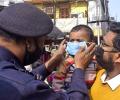
As concerns mounted and some people wondered whether this could possibly turn out to be another Covid, pulmonologist Anurag Agrawal said he doesn't expect to see a massive wave.

The Omicron variant carries 'concerning' mutations that may make it more transmissible and allow it to evade immunity, scientists said on Monday, stressing that the one certainty in the uncertainty of the many things unknown is this -- COVID is not a short-term crisis and vaccines are still a critical tool.

The global heath body had earlier suspended the hydroxychloroquine arm of the clinical trials of experimental COVID-19 drugs over safety concerns.

'Better hygiene practices could lower a person's immunity and make the person susceptible to auto-immune diseases.'
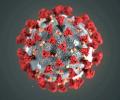
While some reports claim the mutation is capable of enhancing the infectivity of the virus, this is not well established and also does not necessarily indicate more virulence or harmfulness of the disease.

'We must not compromise with the standard, the quality. We don't need to be the first to launch a drug but what we need is a Made in India vaccine that the entire world can rely on'
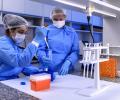
The vaccine candidate, ZyCoV-D, showed a "strong immune response" in animal studies, and the antibodies produced were able to completely neutralise the wild type virus, Zydus said. The 12 institutes have been asked by the ICMR to fast track clinical trials of the vaccine as it is being considered as one of the top priority projects which are being monitored at the topmost level of the government.

Long-term exposure to chronically high PM2.5 levels weakens the ability of the lungs to fend off infections, therefore making people more susceptible to COVID-19, the scientists said.
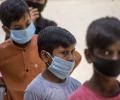
Though there is enough anecdotal evidence of COVID-19 catching children -- early teens and younger -- there is little reason to panic, said several doctors and scientists. They also stressed on the urgent need to vaccinate children to stem the spread of the infection.
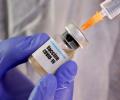
Early data from its vaccine candidate 'mRNA-1273' showed it produced protective antibodies in a group of eight healthy volunteers, Moderna said. The other closely watched COVID-19 vaccine is the one being developed by scientists at Oxford University.

'There will always be hiccups given that the Namami Gange programme is spread over different sectors and involves several agencies.'

Can we make high speed 4G Internet available at 10 cents per GB, and make all voice calls free of cost -- that too in a large and diverse country like India? Can we make high-quality but simple breast cancer screening available to every woman, that too at the extremely affordable cost of $1 per scan? Can we make a portable, high-tech ECG machine which can provide reports immediately and that too at the cost of 8 cents a test? Can we make an eye imaging device that is portable, non-invasive and costs 3 times less that conventional devices? Can we make a robust test for mosquito-borne dengue, which can detect the disease on day 1, and that too at the cost of $2 per test? Amazingly, says Dr R A Mashelkar, the eminent scientist, all this has been achieved in India, not only by using technological innovation but also non-technological innovation.

'If it works, something good can come out of this tragedy for the common public good,' say Dr Prasad Gadgil and Dr Kunal Basu.

'Let me talk about young Indian startups with their hearts in the right place and how they are proving that innovations that represent 'affordable excellence' -- breaking the myth that 'affordability' and 'excellence' cannot go together -- is indeed possible!' says Dr R A Mashelkar, the eminent scientist, in this fascinating feature.

'Just like we have accepted that more Indians have hypertension and diabetes, lower lung capacity of Indians should not be construed as normal.'
